

Cerrar
Productos
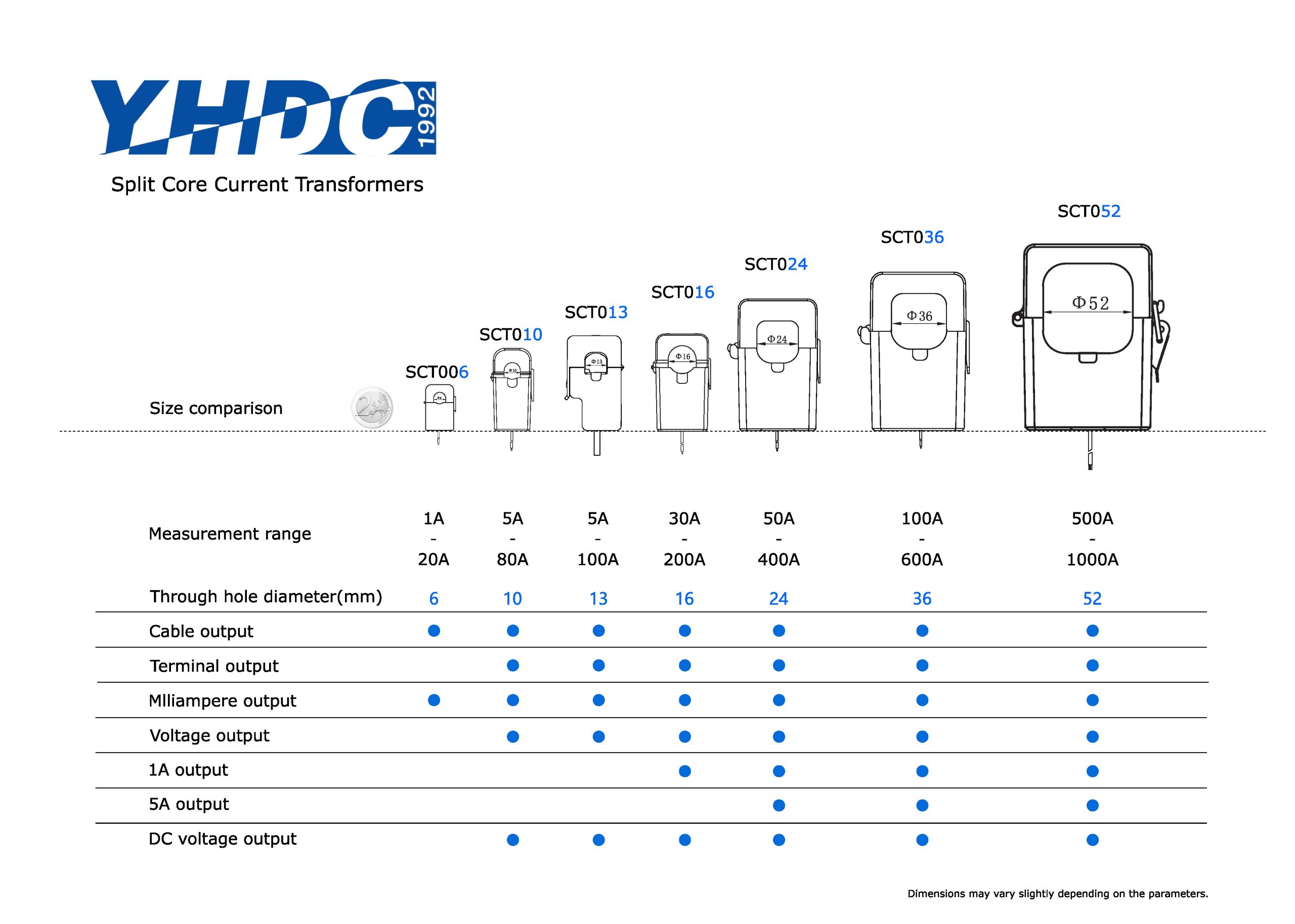
Transformadores de corriente de núcleo partido
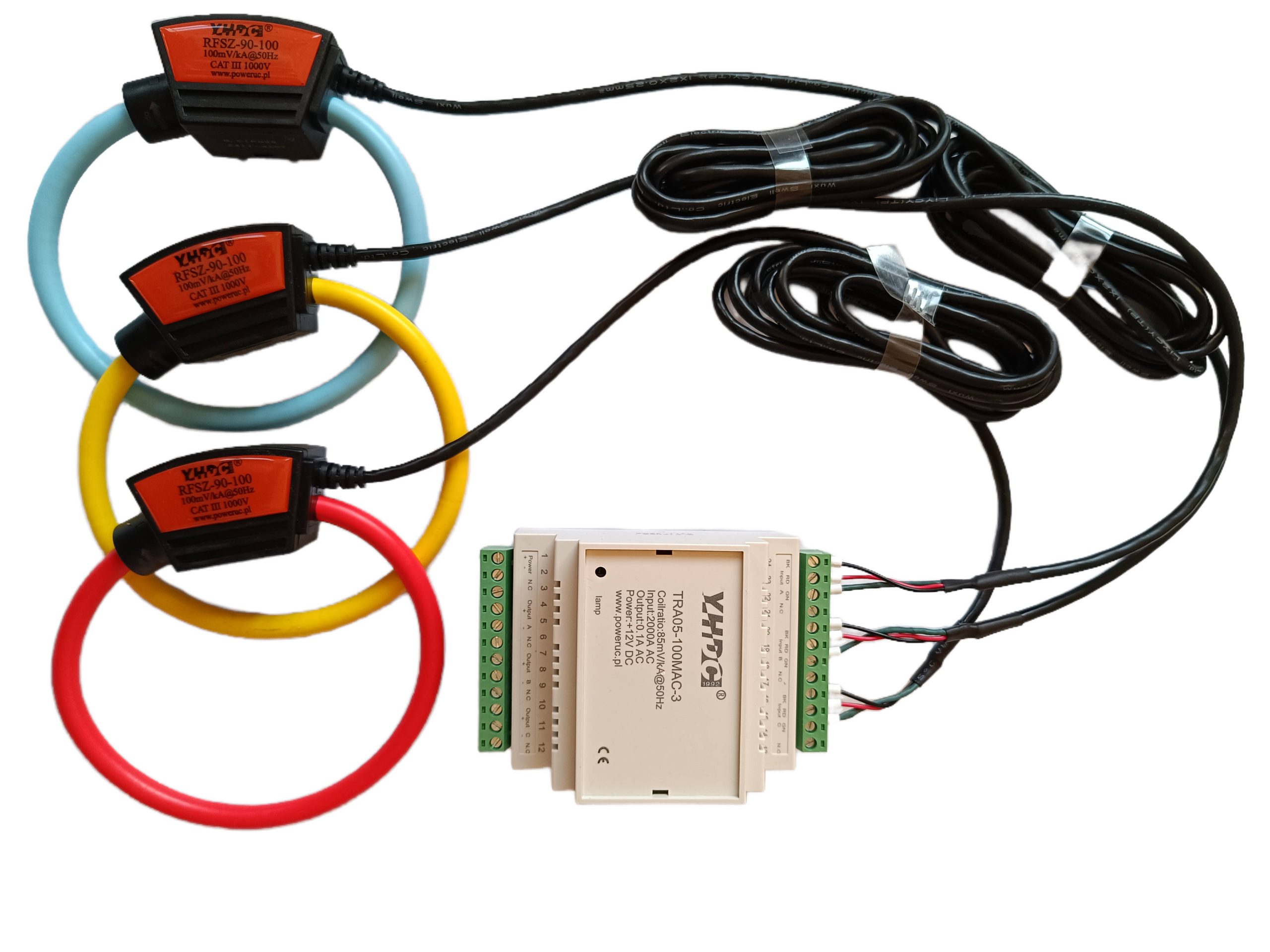
Las bobinas de Rogowski, también conocidas como bobinas huecas o transformadores de corriente flexibles, han logrado una amplia aplicación en la monitorización de energía, la medición de corrientes pulsadas de alta frecuencia y la protección contra altas corrientes gracias a sus importantes ventajas, como la ausencia de saturación magnética, un amplio rango de medición y una instalación sencilla. Sin embargo, en aplicaciones prácticas, las bobinas de Rogowski normalmente no pueden conectarse directamente a instrumentos de medición, sino que deben usarse junto con un integrador.
El principio de funcionamiento de la bobina de Rogowski se basa en la ley de Faraday de la inducción electromagnética. Cuando la corriente medida i(t) pasa por el centro de la bobina, se genera una fuerza electromotriz inducida e(t) dentro de la bobina. Su expresión matemática es:
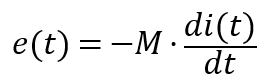
Aquí, M representa el coeficiente de inductancia mutua entre la bobina y el conductor primario.
A partir de la fórmula, puede verse que la tensión de salida de la bobina de Rogowski no corresponde directamente a la magnitud de la corriente, sino que es proporcional a la tasa de cambio (derivada) de la corriente. Esto significa:
• Si la corriente es una corriente continua constante, la salida de la bobina de Rogowski es cero.
• Si la corriente es una onda sinusoidal, la tensión de salida adelantará a la corriente en 90° de fase, y su amplitud aumentará linealmente con la frecuencia.
Por lo tanto, para reconstruir la verdadera forma de onda de corriente i(t), la señal de salida de la bobina debe someterse a un procesamiento matemático de integración.
El integrador desempeña un papel crucial en el sistema de medición con bobina de Rogowski, y sus funciones se manifiestan principalmente en los siguientes tres aspectos:
1 Reconstrucción de la forma de onda (integración): Un circuito electrónico de integración (normalmente un integrador activo compuesto por amplificadores operacionales) convierte la señal di/dt en una señal de tensión proporcional a i(t).
2 Corrección de fase: Compensa el adelanto de fase de 90° generado por la bobina de Rogowski, garantizando que la señal de salida esté en fase con la señal de corriente original. Esto es fundamental para las mediciones de potencia, como el cálculo del factor de potencia.
3 Acondicionamiento y amplificación de señal: La tensión inducida bruta del lazo de corriente suele ser muy débil (nivel de milivoltios). El integrador la amplifica hasta niveles estándar y mejora la capacidad de accionamiento para transmisión a larga distancia o accionamiento de cargas.
Según los requisitos específicos del equipo receptor posterior (como contadores eléctricos, PLC, osciloscopios o dispositivos de protección por relé), los integradores se diseñan con múltiples formatos de salida. La siguiente tabla ofrece una comparación detallada de estos tipos de salida comunes:
| Tipo de salida | Especificaciones típicas | Características de la señal | Aplicaciones principales | Ventajas | Desventajas |
| Salida de tensión instantánea | 333mV CA, 1V CA | Forma de onda CA | Contadores de energía digitales, analizadores de potencia | Alta seguridad (sin alta tensión por circuito secundario abierto), excelente linealidad | Distancia de transmisión limitada, susceptible a interferencias electromagnéticas |
| Salida de corriente instantánea | 1A CA, 5A CA | Forma de onda CA | Sustitución de transformadores de corriente (TC) tradicionales, protección por relé | Compatible con equipos heredados, gran capacidad de accionamiento, adecuada para transmisión remota | Alto consumo de energía, requiere soporte de fuente de alimentación de alta potencia |
| Señal analógica estándar | 4-20mA CC, 0-1V CC | Señal CC/de proceso | PLC, DCS, sistemas de control de automatización industrial | Gran capacidad antiinterferencias (4-20mA), integración sencilla en el sistema | Pérdida de la información original de la forma de onda, refleja solo el valor eficaz |
| Salida sin integrador | Tensión(di/dt) | Forma de onda diferencial CA | Análisis transitorio de alta frecuencia, dispositivos de adquisición de datos con capacidades de integración incorporadas | Ancho de banda extremadamente alto, sin deriva integral, respuesta más rápida | No permite leer directamente valores de corriente, requiere procesamiento posterior complejo |
Actualmente, este es el método de salida más extendido para las bobinas de Rogowski. 333mV representa la especificación estándar de transformador de baja tensión ampliamente adoptada en Norteamérica e internacionalmente. La principal ventaja de este método de salida es la seguridad: incluso si el circuito secundario se desconecta, no genera altas tensiones letales como los transformadores de corriente tradicionales. Conserva perfectamente la información armónica de la corriente, lo que lo hace ideal para el análisis de calidad de energía de alta precisión.
Para mantener la compatibilidad con instrumentos secundarios diseñados originalmente para TC tradicionales de núcleo, los integradores pueden emitir corrientes de 1A o 5A. Este tipo de integrador funciona esencialmente como un amplificador de potencia “tensión a corriente”. Resuelve el problema de que las bobinas de Rogowski no puedan accionar directamente cargas de alta impedancia. Sin embargo, debido a la necesidad de emitir corrientes mayores, el consumo de energía propio del integrador y su tamaño físico aumentan significativamente.
En la automatización industrial, los usuarios a menudo solo requieren el valor RMS de la corriente sin necesidad de inspeccionar las formas de onda. Estos integradores incorporan circuitos internos de conversión RMS-CC que transforman señales CA complejas en señales CC estables. La salida de lazo de corriente de 4-20mA ofrece una inmunidad excepcional al ruido, lo que la hace ideal para transmisión a larga distancia hacia sistemas PLC o DCS.
En aplicaciones científicas especializadas, como la medición de corrientes de rayo o experimentos de física de altas energías, los usuarios pueden capturar directamente la señal di/dt bruta de la bobina de Rogowski. Este enfoque evita las limitaciones de ancho de banda y la deriva de baja frecuencia inherentes a los integradores, permitiendo la integración digital mediante algoritmos de posprocesamiento para lograr anchos de banda de medición extremadamente altos (hasta varios MHz o más).
El integrador aborda problemas esenciales de reconstrucción de forma de onda, corrección de fase y amplificación de señal.
La selección del tipo de salida adecuado depende de su equipo posterior:
•Para precisión y seguridad, elija 333mV/1V CA;
•Para compatibilidad con sistemas heredados, elija 1A/5A CA;
• Para monitorización industrial, elija 4-20mA CC;
•Cuando use equipos de medición compatibles con bobinas de Rogowski o realice investigación de alta frecuencia, considere utilizar la salida directa di/dt.
Al combinar correctamente la bobina de Rogowski con el integrador, puede aprovechar plenamente sus capacidades de amplio rango y sin saturación para lograr un control preciso en entornos de corriente complejos.





Copyright © 2026 PowerUC Electronics Co.