



With the rapid development of commercial and industrial energy storage, residential energy storage, integrated PV-plus-storage systems, and grid-side energy storage power stations, higher requirements are being placed on system safety, stability, efficiency, and intelligent operation and maintenance. In battery energy storage systems, the BMS, PCS, EMS, DC bus, grid-connection cabinets, and safety protection units all require accurate current, voltage, and leakage-current data in real time.
PowerUC specializes in current and voltage sensor products. For energy storage systems, it provides Hall-effect current sensors, zero-flux current sensors, AC/DC current transducers, Rogowski coils, leakage-current sensors, zero-sequence current transformers, AC/DC voltage sensors, and Hall-effect voltage sensors. These products help energy storage systems implement battery-status monitoring, power control, fault protection, grid-connection detection, and predictive maintenance.
Battery cluster and BMS monitoring applications
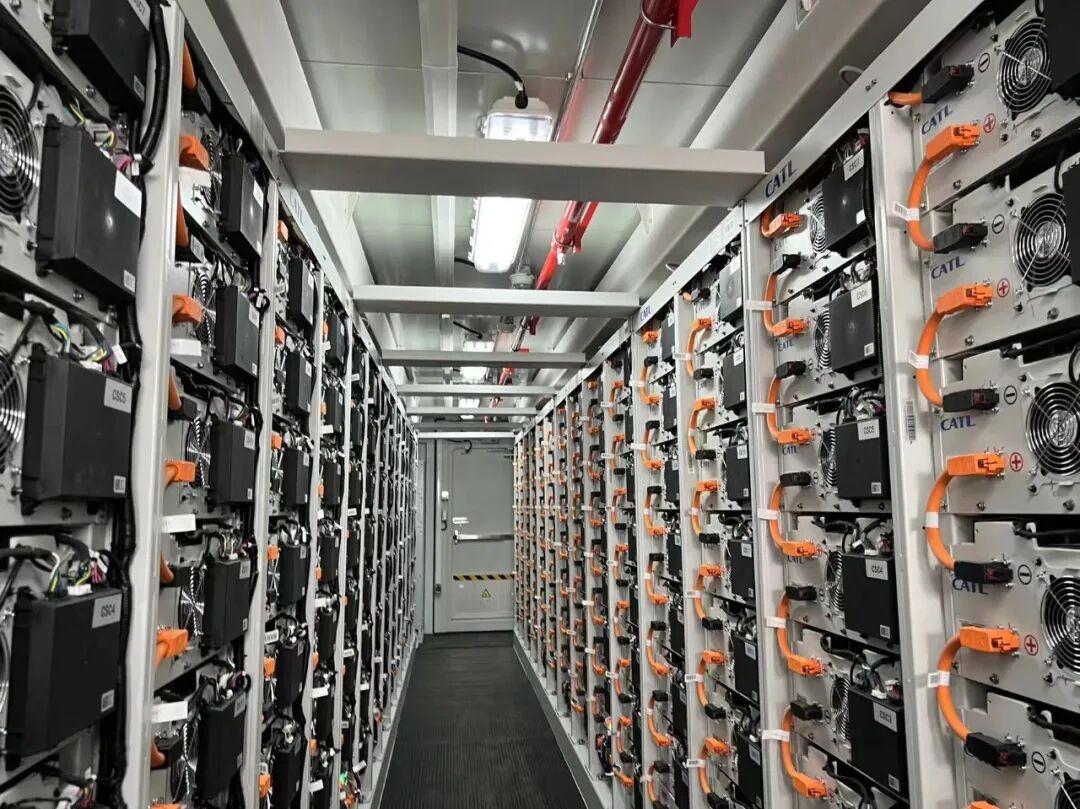
In an energy storage system, the battery cluster is the core energy-storage component. The BMS must monitor key parameters in real time, including battery-cluster charge and discharge current, battery-pack voltage, and total battery-cluster voltage. These measurements are used for SOC estimation, SOH assessment, charge/discharge C-rate control, overcurrent protection, overvoltage protection, undervoltage protection, and battery balancing.
Inaccurate current or voltage sampling may lead to SOC estimation errors, reduce battery utilization, and even increase the risk of overcharging, overdischarging, and unexpected shutdowns. Battery-cluster and BMS applications therefore place high demands on sensor accuracy, stability, isolation performance, and long-term reliability.
Selection recommendations
For conventional measurement of total battery-cluster current, the PowerUCHAB55PCB-mounted closed-loop Hall-effect current sensor can measure DC, AC, and pulsating currents, making it suitable for bidirectional charge and discharge current monitoring.
For high-accuracy SOC/SOH estimation, battery test equipment, or high-end energy storage BMS applications, zero-flux current sensors are recommended. These sensors are suitable for applications with stricter requirements for accuracy, zero-point stability, and long-term drift.
For voltage acquisition from battery packs, battery clusters, and high-voltage boxes, AC/DC voltage sensors or Hall-effect voltage sensors can convert high-voltage signals into standard signals recognized by the BMS or data-acquisition modules, facilitating battery-state evaluation and protection control.
PCS DC-side and DC-bus applications
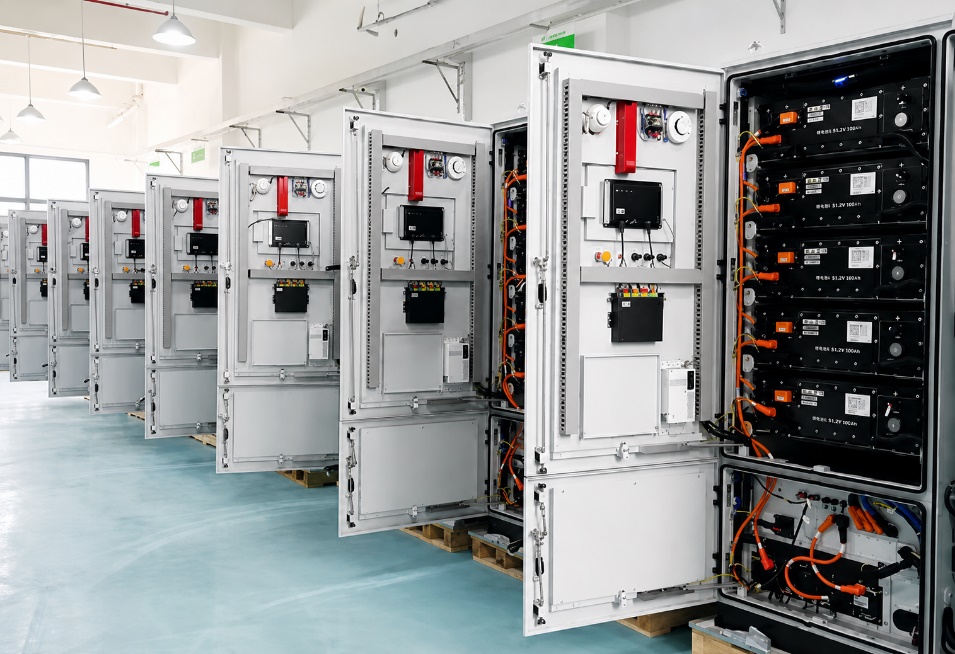
The PCS is the key equipment connecting the battery to the grid. On the DC side, it must measure battery input/output current, DC-bus voltage, DC/DC module current, and voltage changes during pre-charging in real time.
During charging and discharging, the PCS controller relies on current and voltage feedback for power regulation, efficiency calculation, overcurrent protection, overvoltage protection, undervoltage protection, and DC-bus stability control. If a short circuit, sudden load change, abnormal bus voltage, or power-device fault occurs, sensor signals help the system trigger protection strategies quickly.
Selection recommendations
For current measurement at the PCS DC input, DC/DC modules, and DC bus, open-loop or closed-loop Hall-effect current sensors can be selected according to accuracy and cost requirements. TheHK4030open-loop Hall-effect current sensor is suitable for general monitoring and cost-sensitive applications, while theHA5041closed-loop Hall-effect current sensor is suitable for PCS control applications requiring higher accuracy, faster response, and better linearity.
For high-accuracy power calculation, energy metering, or high-end PCS applications, zero-flux current sensors can be used to improve the accuracy and stability of DC-side current measurement.
For monitoring DC-bus voltage, pre-charge voltage, and battery-side input voltage, theHV25Hall-effect voltage sensor helps the PCS detect overvoltage, undervoltage, bus-voltage fluctuations, and abnormal operating conditions.
AC grid-connection and distribution cabinet applications
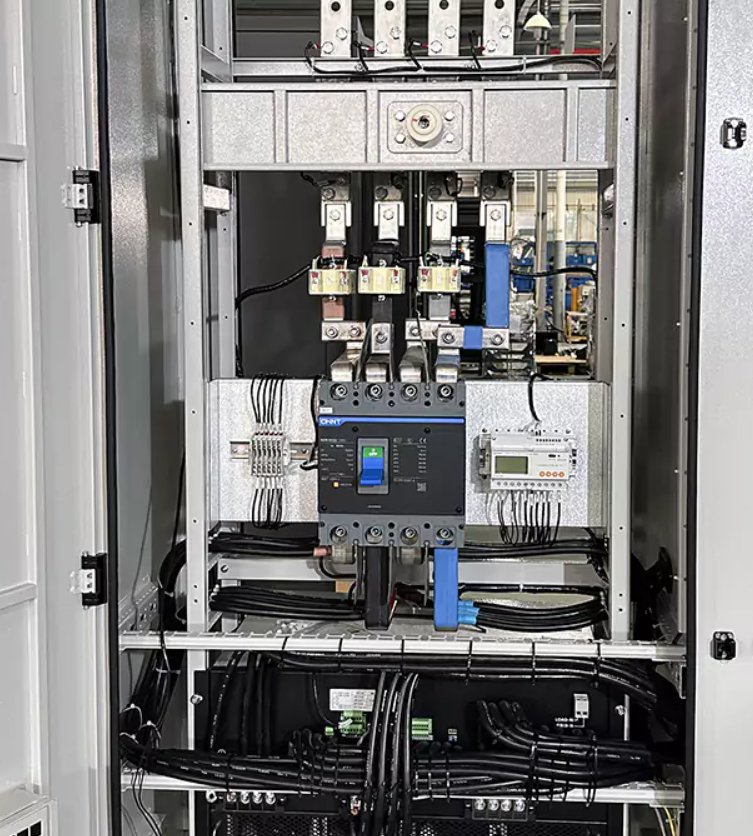
When an energy storage system operates in grid-connected mode, AC-side current and voltage measurement is critical for power control, grid synchronization, power-quality analysis, and grid-connection protection. Grid-connection cabinets, AC distribution cabinets, combiner cabinets, and metering units typically need to monitor three-phase current, three-phase voltage, active power, reactive power, power factor, and grid status.
In grid-side energy storage, commercial and industrial energy storage, and microgrid systems, accurate acquisition of grid-side electrical parameters helps the system perform peak shaving and valley filling, peak and frequency regulation, reactive-power compensation, anti-islanding protection, and power-quality management.
Selection recommendations
For conventional current measurement in AC distribution cabinets, grid-connection cabinets, and metering cabinets, AC/DC current transducers or true-RMS current transducers can provide standard analog output signals for connection to PLCs, PCS controllers, an EMS, or data-acquisition modules.
For energy storage power-station retrofit projects involving high-current busbars, limited installation space, or situations where disconnecting conductors is impractical,RFSZ-series Rogowski coilscan be used withTRA05-series three-channel integratorswith 1 A outputs. Rogowski coils are flexible to install and are suitable for high-current, wide-range, and non-intrusive measurement applications.
For AC grid-side voltage measurement, AC/DC voltage sensors can be used for grid-voltage acquisition, phase synchronization, power calculation, and grid-connection protection.
For three-phase imbalance, ground-fault, or zero-sequence current measurement, zero-sequence current transformers can be selected according to the system protection requirements.
Leakage-current and insulation safety protection applications
Energy storage systems typically operate in high-voltage, high-current environments. Insulation aging, moisture ingress, cable damage, or grounding abnormalities in battery clusters, the PCS, the DC bus, cables, or distribution equipment may generate leakage current and create safety hazards.
Leakage-current monitoring is an important part of energy storage system safety protection. By monitoring earth leakage current and abnormal residual current in real time, the control system can issue early warnings and take measures such as power derating, opening contactors, protective shutdown, or alarm activation.
Selection recommendations
For DC-side insulation faults and DC leakage-current monitoring, theZDA2020DC leakage-current transducer or a leakage-current sensor can be used to detect abnormal leakage current on the battery side, DC bus, and high-voltage DC circuits.
For AC-side distribution protection and ground-fault detection, zero-sequence current transformers can be used to monitor residual current and ground faults in three-phase systems.
For applications that require simultaneous acquisition of operating current and abnormal-current trends, AC/DC current transducers can be combined to link operating-status monitoring with safety protection.
The value PowerUC sensors bring to energy storage systems
Support for multiple energy storage architectures
PowerUC products can be used in residential energy storage, commercial and industrial energy storage, integrated PV-plus-storage systems, microgrid energy storage, grid-side energy storage power stations, and energy storage test equipment, meeting measurement needs across different capacity ratings and voltage platforms.
Lower system operation and maintenance costs
Stable long-term product supply and reliable quality reduce unplanned downtime and improve energy storage system availability.
A wide range of product types and sizes
PowerUC offers multiple types of current sensors, voltage sensors, and leakage-current detection products. Its portfolio covers key areas of energy storage systems from the battery side, DC side, and AC side through safety protection and operation-and-maintenance monitoring, providing reliable sensor solutions for energy storage equipment manufacturers, system integrators, and power-station operators.