

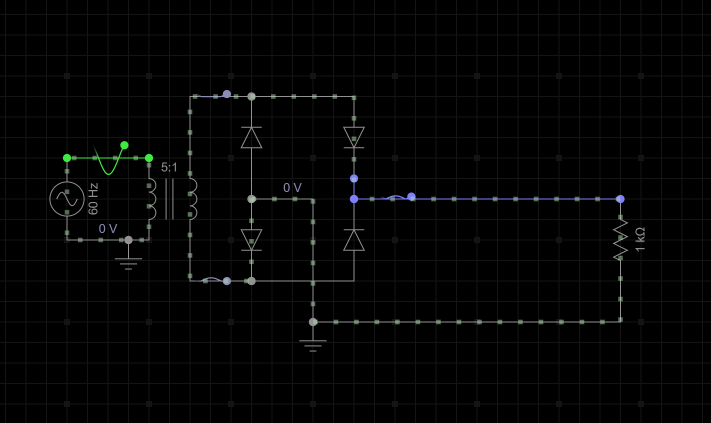
Transformers always output alternating current (AC), not direct current (DC). Their function is to maintain the alternating current characteristics (reversing 50 or 60 times per second) while increasing or decreasing the voltage. So, why do LED lights light up, and why can some “direct current” devices still work when directly connected to the output end of the transformer? The reason is simple.
An LED light is essentially a diode. It allows current to flow in one direction (forward bias) and blocks current from flowing in the other direction. Therefore, it lights up every other half cycle. Approximately half of its brightness is used, and theoretically it will flicker at the mains frequency (50/60 Hz), but the human eye usually cannot detect this flicker.
The reverse voltage ratings of many LEDs are usually only 5-10V. The peak reverse voltage of a 12V AC transformer is approximately 17V. Long-term use will cause the LED lights to be damaged.
The correct circuit design should include a resistor in series for current limiting and an additional diode for reverse connection or the addition of a rectifier device.




Copyright © 2024 PowerUC Electronics Co.