


What Is a Switched-Mode Power Supply (SMPS)?
Compared with traditional linear power supplies, switched-mode power supplies (SMPSs) offer higher efficiency and occupy less space, but care must be taken to keep output noise at a low level.
Overview of Switched-Mode Power Supplies
Switched-mode power supplies are widely used because of their advantages in size, weight, cost, efficiency, and overall performance.
Thanks to these performance advantages, switched-mode power supplies are used in most types of electronic systems to provide efficient and effective power, except in the most demanding applications.
Switched-mode power supplies have become a widely accepted part of electronic technology. They are also commonly referred to as switched-mode power converters, or simply as “switchers.”
Switched-Mode Power Supply Terminology
Several closely related terms are used for switched-mode power supply (SMPS) technology. Although they all refer to the same basic technology, they describe different parts of the overall system.
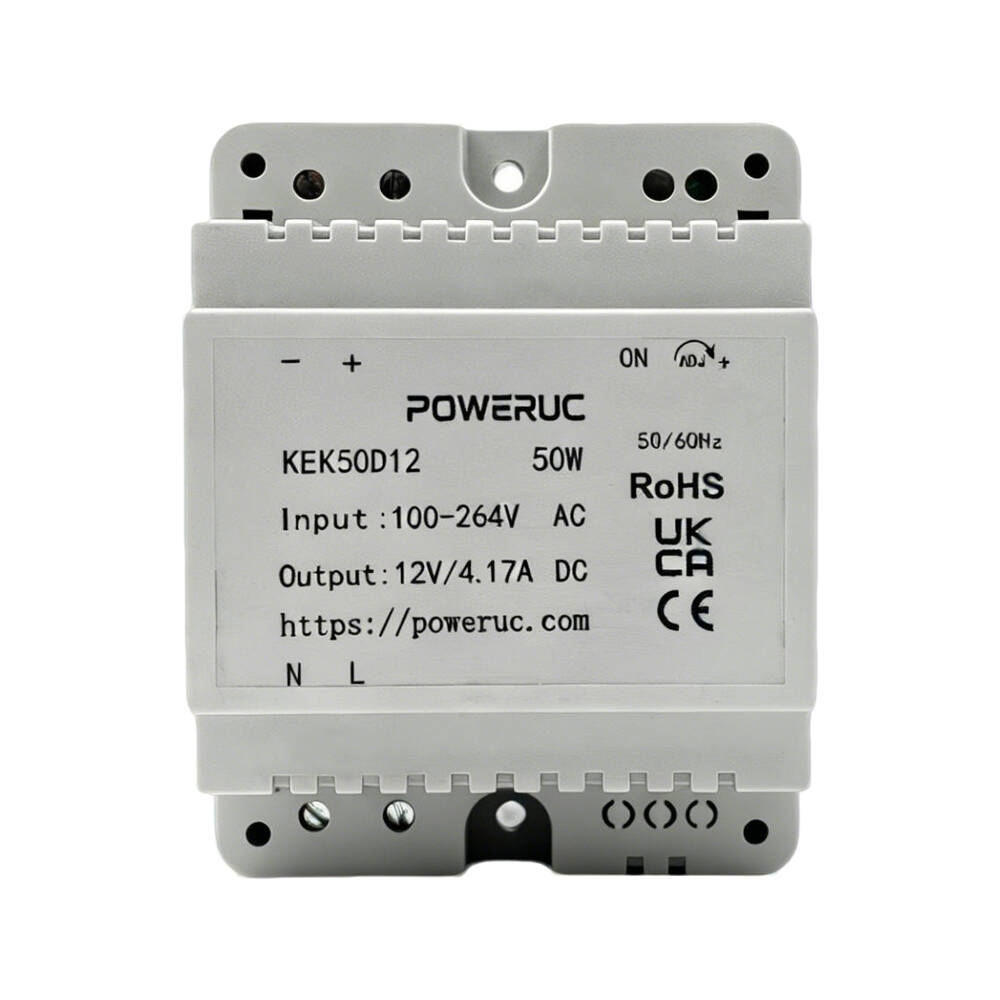
- Switched-mode power supply (SMPS): This term usually refers to a complete unit that connects to the mains supply or another external power source and produces a regulated output. In other words, it is a complete power supply.
- Switching regulator: This usually refers only to the electronic circuit that performs the voltage-regulation function. A switching regulator is one part of a complete switched-mode power supply.
- Switching regulator controller: Many switching-regulator integrated circuits do not include the series switching element. This is especially true in higher-current or higher-voltage applications, where an external series switching element is better able to withstand the current, voltage, and resulting power dissipation.
Switched-Mode Power Supply Fundamentals
The basic concept of a switched-mode power supply (SMPS) is to use a switching regulator to control the output voltage. It employs a series switching element that periodically turns the current flowing to a smoothing capacitor on and off.
The on-time of the series element is controlled by the voltage across the capacitor. If the voltage rises above the required value, the series switching element turns off; if the voltage falls below the required value, it turns on. In this way, the voltage across the smoothing or energy-storage capacitor is maintained at the required level.
Principle of Operation of a Switching Regulator
Advantages and Disadvantages of Switched-Mode Power Supplies
Any technology generally requires a careful assessment of its advantages and disadvantages. Switched-mode power supplies are no exception: they offer several clear benefits, but they also have limitations.
Advantages of Switched-Mode Power Supplies
- High efficiency: Because of the switching mode of operation, the series regulating element is either on or off. Very little energy is therefore dissipated as heat, enabling very high efficiency.
- Compact design: High efficiency and low heat-dissipation requirements allow switched-mode power supplies to be made more compact.
- Cost: Cost is one of the most attractive aspects of switched-mode power supplies. Their high efficiency and switching design mean that they dissipate less heat than linear power supplies, which helps reduce cost. In addition, switching operation allows many components to be implemented using lower-cost devices.
- Technical flexibility: Switched-mode power supply technology can be used in both boost and buck applications, enabling efficient voltage conversion.
Disadvantages of Switched-Mode Power Supplies
- Noise: The transient spikes generated during switching are one of the main drawbacks of switched-mode power supplies. If these spikes are not properly filtered, they may propagate to different parts of the circuitry powered by the SMPS. The spikes or transient disturbances may also produce electromagnetic interference or radio-frequency interference that affects nearby electronic equipment, especially radio receivers.
- External components: Although a switching regulator can be designed around a single integrated circuit, external components are usually still required. The most obvious is the energy-storage capacitor, and filtering components are also needed. In some designs, the series switching element can be integrated into the chip, but where a certain amount of current must be delivered, the series switch is usually an external component. These components occupy space and add cost.
- Specialist design expertise required: Building a switched-mode power supply that operates is usually not difficult, but ensuring that it meets the specified performance requirements can be more challenging. In particular, keeping ripple and interference within required limits can be quite demanding.
- Filtering: The filtering of a switched-mode power supply must be designed carefully, because poor filter design can result in high levels of noise and spikes at the output.